









If you’re an adult living with ADHD, you already know that managing it isn’t as simple as “just trying harder.” The racing thoughts during meetings, the half-finished projects, the constant feeling of being behind—these aren’t character flaws. They’re symptoms of a brain that works differently.
For years, the conversation around ADHD treatment focused almost exclusively on medication. But that’s changing. More adults are discovering that lifestyle strategies can significantly improve focus, emotional regulation, and daily functioning—either alongside medication or on their own.
Whether you’ve decided medication isn’t right for you, you’re looking for strategies to complement your current treatment, or you simply want to explore what else is out there, natural approaches can make a real difference.
This guide covers the most effective, research-backed natural strategies for managing ADHD symptoms as an adult. No miracle cures—just practical tools that work with your brain instead of against it.
Why Natural Approaches Matter for Adult ADHD
ADHD doesn’t disappear when you turn 18. According to the National Institute of Mental Health, many people diagnosed as children continue to experience symptoms well into adulthood. For others, ADHD isn’t recognized until their 30s, 40s, or later.
The adult ADHD brain faces unique challenges. You’re expected to manage complex schedules, maintain relationships, and stay on top of responsibilities that require exactly the skills ADHD affects most: planning, organization, and sustained attention.
Natural strategies work by supporting your brain’s neurochemistry and creating an environment where you can function at your best. They’re not about forcing yourself to be “normal”—they’re about building a life that fits how your mind actually works.
Exercise: Your Brain’s Best Friend
If you only do one thing on this list, make it exercise. The research here is clear: physical activity directly impacts the brain systems most affected by ADHD.
When you exercise, your brain releases dopamine and norepinephrine—the same neurotransmitters targeted by ADHD medications. A meta-analysis published in Psychiatry Research found that physical exercise significantly improves attention and executive function in people with ADHD.
Beyond the chemistry, exercise helps burn off restless energy, improves sleep quality, and reduces the anxiety that often accompanies ADHD.
What works best:
-
Cardio activities like running, swimming, or cycling
-
30 minutes most days (even 15 minutes helps)
-
Morning workouts can improve focus throughout the day
-
Activities you actually enjoy—consistency matters more than intensity
The key is finding movement you’ll stick with. If you hate running, don’t run. Dance, hike, play basketball, or take your dog on long walks. The best exercise for ADHD is the one you’ll actually do.
Sleep: The Foundation Everything Else Builds On
ADHD and sleep problems go hand in hand. Your brain might race at night, making it hard to wind down. Or you might hyperfocus on something and suddenly realize it’s 2 AM. Poor sleep makes every ADHD symptom worse, creating a frustrating cycle.
The Sleep Foundation reports that 25% to 50% of people with ADHD experience sleep difficulties. Breaking this cycle can dramatically improve daytime focus and emotional regulation.
Strategies that help:
-
Set a consistent bedtime and wake time, even on weekends
-
Create a wind-down routine that starts 30-60 minutes before bed
-
Limit screens in the evening (or use blue light filters)
-
Keep your bedroom cool, dark, and quiet
-
Use deep pressure tools to calm your nervous system before sleep
If you’ve tried everything and still struggle, it might be worth exploring whether you have a co-occurring sleep disorder. Many adults with ADHD also have conditions like sleep apnea or restless leg syndrome that require specific treatment.
Deep Pressure Therapy: Calming the Nervous System
When your mind won’t stop racing, sometimes the fastest path to calm is through the body. Deep pressure therapy (also called deep pressure stimulation) uses firm, gentle pressure to activate your parasympathetic nervous system—the part responsible for rest and relaxation.
This is the science behind why hugs feel calming, why some people love weighted blankets, and why squeezing a stress ball can help you focus. Deep pressure increases serotonin and dopamine while reducing cortisol, your body’s primary stress hormone.
For adults with ADHD, deep pressure can help with:
-
Reducing restlessness and fidgeting
-
Improving focus during work or study
-
Calming down after overstimulation
-
Transitioning to sleep at night
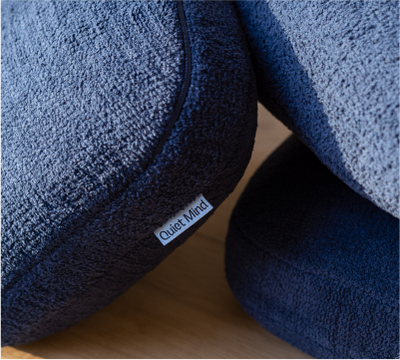
A weighted pillow offers a practical way to get these benefits throughout the day. Unlike a blanket, it’s portable enough to use at your desk, on the couch, or while traveling. The pressure provides grounding input without restricting movement—helpful when sitting still for long periods feels impossible. Learn more about how weighted pillows work and why they’re becoming popular for focus and calm.
Mindfulness: Training Your Attention
The idea of meditation might seem impossible when your brain won’t stop jumping from thought to thought. But mindfulness isn’t about achieving a blank mind—it’s about noticing when your attention wanders and gently bringing it back.
A systematic review in the Journal of Affective Disorders found that mindfulness-based interventions show promising results for adults with ADHD, particularly for improving attention and reducing emotional reactivity.
The good news: you don’t need to sit in silence for an hour. Even short practices can help.
Getting started:
-
Begin with just 5 minutes a day
-
Use guided meditations (apps like Headspace have ADHD-specific content)
-
Try “open awareness” practices where you notice thoughts without judging them
-
Practice during routine activities like showering or walking
Think of mindfulness as exercise for your attention. You’re not trying to stop thoughts—you’re building the muscle that notices when you’ve drifted and brings you back. Over time, that muscle gets stronger.
Nutrition: Fueling Your Brain
Your brain uses more energy than any other organ, and what you eat affects how well it functions. While no diet “cures” ADHD, certain nutritional strategies can support better focus and mood stability.
CHADD (Children and Adults with ADHD) notes that a healthy, balanced diet can provide an effective complementary approach to alleviating some symptoms of ADHD.
Practical nutrition tips:
-
Eat protein with every meal to support dopamine production
-
Choose complex carbs over refined sugars to avoid energy crashes
-
Include omega-3 rich foods like salmon, walnuts, and flaxseeds
-
Stay hydrated—even mild dehydration affects focus
-
Notice if certain foods make your symptoms worse
Some adults with ADHD are more sensitive to artificial additives and food dyes. If you suspect this applies to you, try eliminating them for a few weeks and see if you notice a difference.
Designing Your Environment for Success
Your environment matters more than willpower. When your surroundings work against you, staying focused becomes exhausting. When they support you, good habits happen more naturally.
Environmental strategies:
-
Reduce visual clutter in your workspace
-
Use noise-canceling headphones or background music to manage auditory distractions
-
Keep commonly lost items (keys, wallet, phone) in designated spots
-
Set up systems that make the right choice the easy choice
Structure and routines:
-
Use time-blocking to create clear boundaries between tasks
-
Set alarms and reminders for transitions
-
Build morning and evening routines that run on autopilot
-
Break large projects into smaller, concrete steps
The goal isn’t to create a rigid schedule that feels suffocating. It’s to reduce the number of decisions you have to make each day so you have more mental energy for what matters.
Building Your Personal Strategy
There’s no one-size-fits-all approach to managing ADHD. What works brilliantly for one person might do nothing for another. The key is experimentation and self-awareness.
Start with one strategy from this list—whichever feels most doable right now. Give it a genuine try for a few weeks before adding another. Stacking too many changes at once is a recipe for overwhelm.
Pay attention to what actually helps. Keep notes if it helps you track patterns. And be patient with yourself. Managing ADHD is a long game, not a quick fix.
If you want a deeper dive into specific strategies, check out our guide to strategies for managing ADHD without medication for additional tools and techniques.
Moving Forward
Living well with ADHD isn’t about becoming someone you’re not. It’s about understanding your brain, building systems that support it, and giving yourself the same compassion you’d offer a friend.
Some days will be harder than others. The strategies that work one week might need adjusting the next. That’s not failure—that’s the reality of managing a dynamic condition.
Remember: millions of adults are navigating this same journey. You’re not alone, and there’s no single “right” way to manage ADHD. What matters is that you keep showing up, keep experimenting, and keep building a life that works for you. Your ADHD brain isn’t broken. It just needs the right support to thrive.